Ignition Interlock and FR-44 in Florida
An ignition interlock may be required in some Florida DUI cases, and it is separate from the FR-44 filing. Here is how the device and the insurance requirement differ and how to manage both.
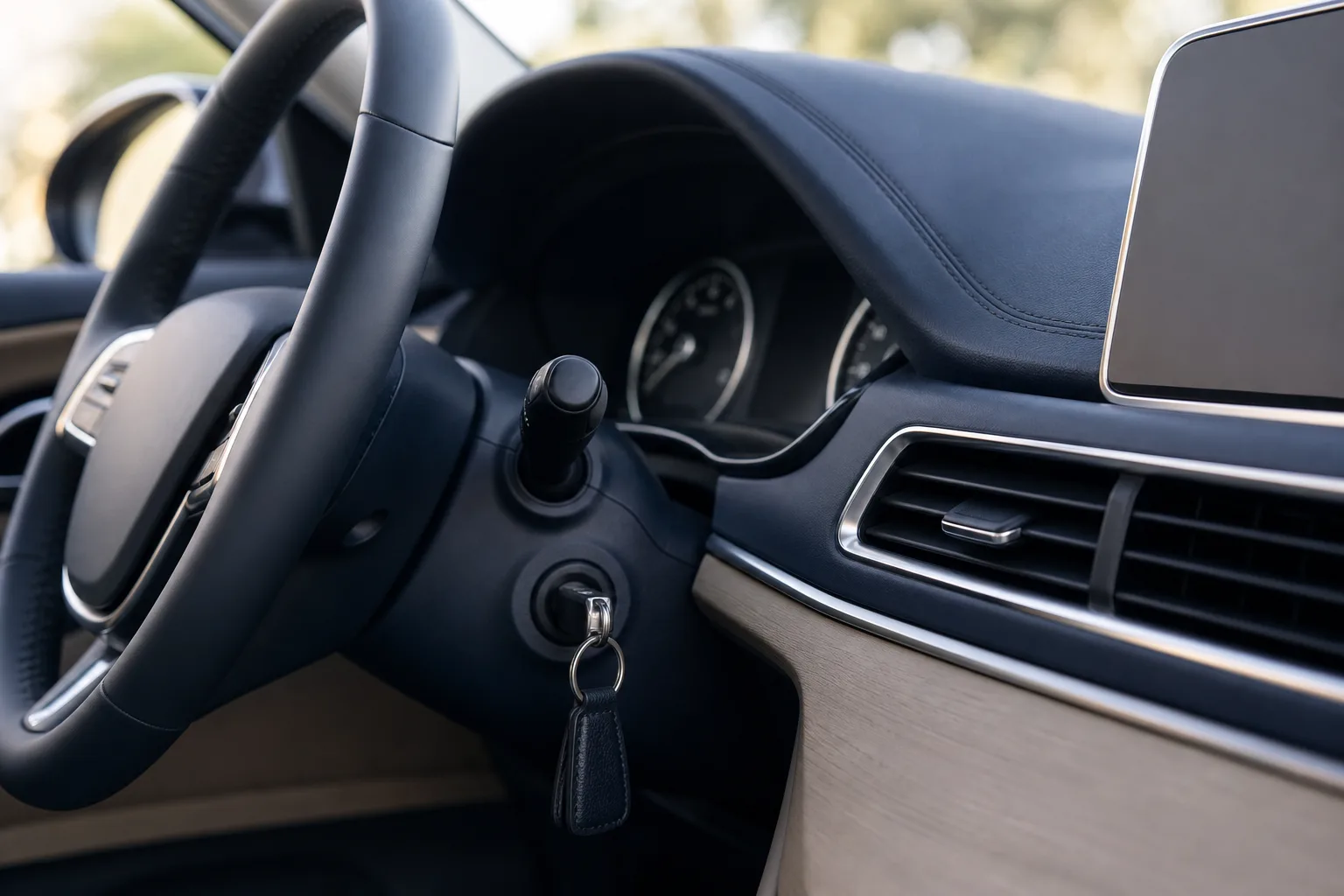
An ignition interlock device may be required in some Florida DUI cases, and it is separate from the FR-44 insurance filing. The interlock is a breath-tested device installed in your vehicle; the FR-44 is proof to the state that you carry the higher liability limits Florida requires. You may deal with both.
What is an ignition interlock device?
An ignition interlock device is a small breath-testing unit wired to a vehicle’s ignition. The driver provides a breath sample, and the car will start only if no alcohol is detected. In some DUI cases, Florida may require one.
The purpose is straightforward: it is a safeguard that keeps a vehicle from starting when alcohol is present. Where it applies, the device is installed in the car you drive and used each time you start it. Under section 322.2715, the FLHSMV requires an interlock for at least 6 months on a first conviction when the breath-alcohol level is 0.15 or higher or a minor was in the vehicle, and for at least 1 year on a second conviction, longer if the case is aggravated.
It is worth separating the device from the paperwork in your mind. The interlock lives in your car. The FR-44 lives with the state, filed by your insurer. They are two different requirements that can run at the same time.
In everyday use, the device is meant to be routine rather than dramatic. You provide a sample, the vehicle starts, and you go about your day. Where one is required, it tends to become a normal part of driving fairly quickly, much like a seatbelt habit. The main thing to understand up front is that it is a condition tied to the vehicle and your case, not a comment on your insurance status, which is handled entirely on a separate track.
The device is not the filing
An interlock is a physical device in your vehicle. An FR-44 is an electronic certificate your insurer sends the state. Do not assume handling one takes care of the other.
Who might have to use an interlock?
Whether an interlock is required depends on the details of a DUI case, and those rules are set by the state and the courts rather than by an insurer. In general terms, an interlock is one of the conditions that may be attached to some cases.
As section 322.2715 lays out, the details turn on factors like whether it is a first or a repeat conviction, the breath-alcohol level involved, and whether a minor was in the vehicle, which is why one driver’s requirement can look different from another’s. If limited driving during a suspension is part of your situation, an interlock condition can also connect to a hardship license. Our guide to the Florida DUI hardship license and FR-44 explains how those pieces line up.
How is an interlock different from an FR-44?
They serve completely different functions. An interlock is a device that controls whether your car starts. An FR-44 is a filing that proves to the state you carry 100/300/50 liability coverage after a DUI.
The FR-44 is handled entirely through insurance. You buy a qualifying policy, and your carrier files the certificate electronically with the FLHSMV; you never file it yourself. Florida generally expects that filing to stay continuous for about three years. The interlock, by contrast, is arranged and serviced through the device side of your case, not your policy.
Confusing the two is a common and understandable mistake, because both arrive around the same time and both feel like requirements you must satisfy to drive again. But they answer different questions. The interlock answers whether a specific car will start. The FR-44 answers whether the state has proof you carry the coverage the law requires. Satisfying one does nothing for the other, which is why you track them separately.
| Ignition interlock | FR-44 | |
|---|---|---|
| What it is | A breath-tested device | An insurance filing |
| Where it lives | In your vehicle | With the state, via your insurer |
| Who handles it | Installed and serviced for your case | Filed electronically by your carrier |
| Purpose | Prevents starting with alcohol present | Proves 100/300/50 coverage |
| Connected to insurance? | Not directly | Directly, it is the policy |
Does an interlock change your insurance?
Your insurance rate is driven mainly by the DUI and the higher FR-44 limits, not by the presence of the device itself. The FR-44 is where the cost pressure comes from.
Because an FR-44 requires 100/300/50 liability and follows a DUI, the policy behind it is priced above standard regardless of the interlock. What you can influence is the carrier: DUI pricing varies widely, so comparing several insurers is the strongest way to lower your rate. For the full picture on coverage after a DUI, see our overview of DUI insurance in Florida.
This is reassuring in a way, because it means the device is not an extra insurance surcharge you need to worry about layering on top. Your energy on the cost side is best spent where it actually moves the number, which is shopping carriers and, if you do not own a vehicle, asking about a non-owner FR-44. The device is a separate obligation with its own arrangements, and it does not change that the biggest savings on your policy come from comparison.
When you do gather quotes, it is fine to mention your full situation, including the interlock, so the coverage lines up with the vehicle you actually drive. But do not expect the device itself to be the number you are negotiating. The premium reflects the DUI and the required limits, and the way you bring it down is the same as for any FR-44 driver: compare several carriers, keep the policy continuous, and ask about every discount you might qualify for.
The interlock keeps your car honest. The FR-44 keeps the state satisfied. Treat them as two tasks on the same list, and neither one catches you off guard.
How do you manage the interlock and FR-44 together?
Manage them as parallel tracks: keep the device in good standing on its own schedule, and keep your FR-44 policy continuously active on its. Missing either can set you back.
The reason to picture them as separate tracks is that they fail in separate ways. A problem with the device is handled through the arrangements for your case, while a problem with the FR-44 is handled with your carrier. If you blur them together, it is easy to assume that keeping up with one covers the other, and that assumption is exactly where drivers get caught. A short weekly glance at both, the device on its schedule and the policy on its billing cycle, keeps either from slipping.
- Confirm exactly what your case requires for the device, and follow that schedule.
- Buy a qualifying FR-44 policy so your insurer can file it electronically.
- Never let the FR-44 policy lapse, since a gap is reported to the state.
- Compare carriers to keep the FR-44 premium as low as possible.
- Keep records for both the device and the filing in one place.
A lapse undoes progress
With an FR-44, continuous coverage is everything. If the policy lapses, the state is notified and the requirement can restart, no matter how the interlock side is going.
Kept on their tracks, both requirements have an end. If you want to understand why you are now rated as higher risk while all this runs, our guide to high-risk driver insurance in Florida spells it out.
Frequently asked questions
Is an ignition interlock always required after a DUI in Florida?
Not always. Under section 322.2715, the FLHSMV requires one for at least 6 months on a first conviction when the breath-alcohol level is 0.15 or higher or a minor was in the vehicle, and for at least 1 year on a second conviction, longer if aggravated.
Is an interlock the same as an FR-44?
No. An interlock is a breath-tested device in your vehicle. An FR-44 is an electronic filing your insurer submits proving you carry 100/300/50 coverage. They are separate requirements.
Does having an interlock raise my insurance?
Your rate is driven mainly by the DUI and the higher FR-44 limits, not the device itself. Comparing carriers is the strongest way to lower the FR-44 premium.
Do I file the FR-44 myself?
No. You buy a qualifying policy and your insurer files the FR-44 electronically with the FLHSMV. Drivers do not submit the certificate themselves.
How long does the FR-44 stay in place?
Florida generally requires the FR-44 for about three years of continuous coverage. A lapse is reported to the state and can restart the requirement.
Can an interlock connect to a hardship license?
It can. An interlock condition may relate to limited driving during a suspension. Confirm the specifics for your case, since these details vary and can change.
Informational only. Not legal, financial, or insurance advice. FR-44 and SR-22 requirements are set by Florida (FLHSMV) and the courts and can change; verify your specific requirement with the FLHSMV. Pricing shown is illustrative, not a quote. FR44 Insurance of Florida is an independent insurance agency and not a government entity.